An Affordable EU Gateway to English-Medium Education
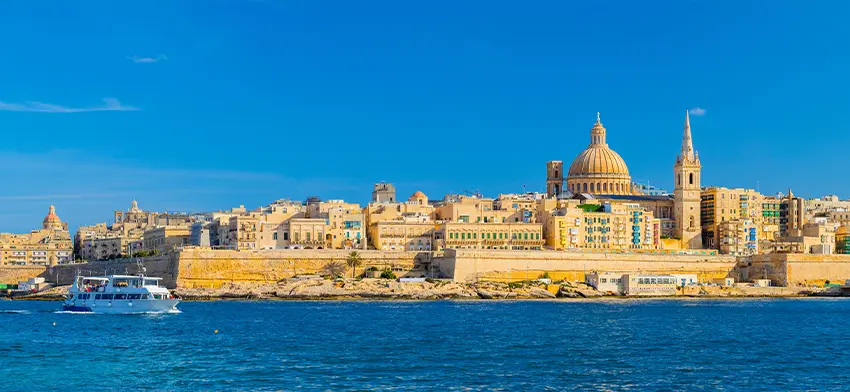
Studying in Malta is an excellent option for international students looking for English-language education within the European Union. With a population of around 545,000, Malta is a small island nation in the Mediterranean, located near Italy, Tunisia, and Libya. The country offers a warm climate, a lively cultural scene, and a high level of safety. The country is especially appealing to students looking for a secure and social environment.
Malta’s higher education system follows the Bologna Process. Its degrees are aligned with EU standards. Bachelor’s degrees typically take three years to complete. Master’s programs usually run for two years, although some are accelerated to one year. PhDs can be completed in three years full-time, or up to six years part-time when combined with teaching.
As a former British colony, Malta adopted English as an official language alongside Maltese. Today, around 90% of the population speaks English fluently, and all major degree programs are available in English. Malta’s location, language, and academic standards make it a practical and affordable alternative to larger, more expensive study destinations in Europe.
Why Malta?
English is an Official Language
Low Tuition Fees
Reasonably Priced Programs
Warm, Social Environment
Reasons to Choose Maltese Universities
Tuition fees in Malta are charged per semester and vary based on nationality. Maltese, EU, EEA, and Swiss students study free of charge at public institutions. International students from other countries typically pay €1,080 per semester for most courses or €1,360 per semester for science and engineering degrees. Students can also work part-time. During the academic year, they can work up to 15 hours per week and full-time during holidays.
International students who finish their studies in Malta can apply to stay in the country for up to one year after graduation. This post-study period gives you time to look for a job. Once you’ve secured employment, you can apply for temporary residence and continue living in Malta legally while working.
When it comes to permanent residence (PR), Malta takes a different approach compared to many other countries. Instead of requiring you to live and work in the country for a set number of years, Malta offers an investment-based PR programme. You don’t need to meet a minimum stay requirement to be eligible. If you meet the conditions, such as investing in property or contributing to a government fund, you can apply for PR without needing to work or live in Malta for several years beforehand.
Malta is an EU member that participates in the Erasmus program. This allows students to spend part of their studies in other European countries. Non-EU students must apply for a study visa for courses longer than 90 days.
Top Universities in Malta
Queen Mary University of London, Malta Campus (QS #120)